 Northline Audit
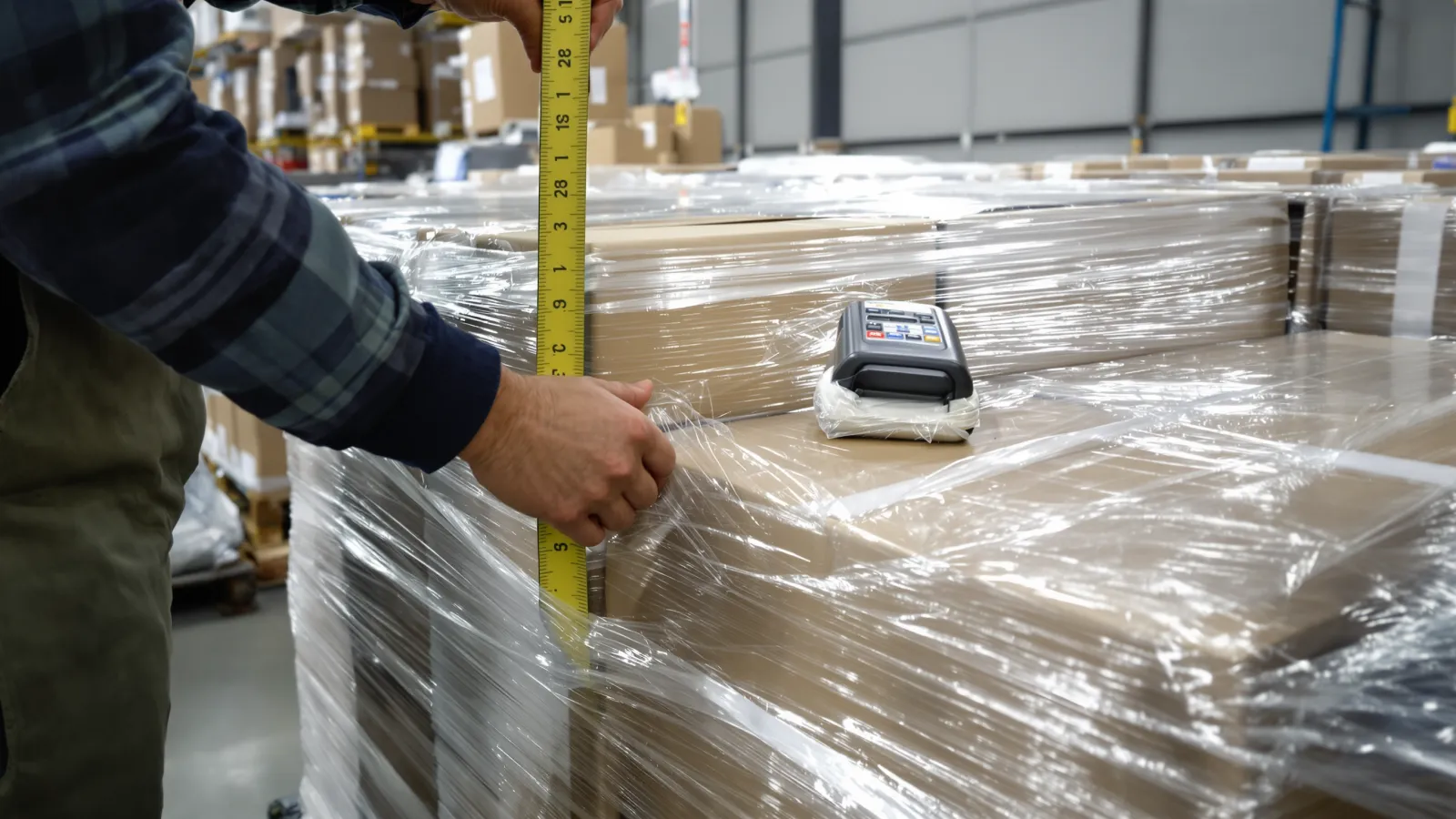
Short answer. NMFC Docket 2025-1 took effect on 19 July 2025. It moved many items to one standard density scale and stretched that scale from 11 steps to 13. Freight that weighs 30 pounds per cubic foot or more now lands in class 60, 55 or 50 instead of always 60. A reclass is the carrier saying your freight belongs in a different class than your bill of lading says. It is only right if their measurements are.
What changed in 2025
The National Motor Freight Classification (NMFC) is published by the National Motor Freight Traffic Association (NMFTA). It gives every commodity a class from 50 to 500. Higher class, higher rate.
NMFTA says the 2025 changes standardise classes on density when a product has no special handling, stowability or liability concerns. Items that do have those concerns still get them considered (NMFTA).
The first set of changes, Docket 2025-1, became effective on 19 July 2025 (NMFTA ClassIT+ FAQ, NMFTA). NMFTA kept going with Docket 2025-2, which consolidated more commodity listings.
The 13-step density scale
Steps 1 to 10 did not change. Step 11 used to cover everything at 30 pcf (pounds per cubic foot) and up. It now stops at 35, and two new steps sit above it.
| Sub | Density (pcf) | Class | Before |
|---|---|---|---|
| 1 | Less than 1 | 400 | Same |
| 2 | 1 to under 2 | 300 | Same |
| 3 | 2 to under 4 | 250 | Same |
| 4 | 4 to under 6 | 175 | Same |
| 5 | 6 to under 8 | 125 | Same |
| 6 | 8 to under 10 | 100 | Same |
| 7 | 10 to under 12 | 92.5 | Same |
| 8 | 12 to under 15 | 85 | Same |
| 9 | 15 to under 22.5 | 70 | Same |
| 10 | 22.5 to under 30 | 65 | Same |
| 11 | 30 to under 35 | 60 | Was 30+, class 60 |
| 12 | 35 to under 50 | 55 | New |
| 13 | 50 and over | 50 | New |
Source: NMFTA Disposition Bulletin 1371 (Docket 2025-1, 14 Mar 2025) and the ClassIT+ FAQ, which describes the change to subs 11 to 13.
How density is worked out
Density is weight divided by cubic feet. Our freight class calculator does the math and checks it against the billed class. Measure the shipment's length, width and height in inches at the widest points, multiply, and divide by 1,728 to get cubic feet. Carriers point to the NMFC's own method, Item 110, Section 8 (FedEx Freight Item 980 and XPO Item 26 both cite it).
An illustrative pallet
The scale also cuts the other way. A 48 × 40 × 40 pallet at 1,900 lb is 42.75 pcf. On the old 11-step scale that was class 60. On the new scale it is class 55. If your bill still shows the old class for a density-rated item, ask why.
What carriers charge for a reclass
| Carrier and item | Trigger | Fee |
|---|---|---|
| FedEx Freight, FXF 100-Y, Item 981 | Any adjustment to linehaul or extra charges because of an inspection. One fee per shipment. | $40.00 |
| Old Dominion, ODFL 100-Q, Item 367 | An inspection that results in a reclassification. | $25.00 |
| XPO, CNWY 199-AK.3, Item 26 | A correction to density, value, lineal feet, cubic capacity or class that raises linehaul by $1.00 or more. | $50.70 |
Two carrier rules change the math. XPO's Item 26 uses a minimum height of 96 inches for any article 75 inches or taller, unless it measures more. And when a description on the BOL is too vague to classify, XPO bills at class 150 first and may inspect.
Watch for tariff lag. XPO's January 2025 edition (CNWY 199-AJ), issued before Docket 2025-1 took effect, ended its density table at "30 or greater, class 60". The current edition (CNWY 199-AK.3, effective 17 Aug 2026) ends at "50 or greater, class 50", in line with the new scale. If you have older bills, check which edition was in force on the ship date.
How to check a reclass on your bill
- Find the NMFC item and sub on your BOL. If the item moved to density in 2025, the old single class no longer applies.
- Ask for the inspection record. You want the dimensions the carrier measured, the weight it used and any photos it took.
- Recompute the density. Use the carrier's dimensions and your weight, then the carrier's dimensions and its weight. Find which number moved.
- Check your agreement. If you have FAK (freight all kinds) classes, the carrier may have to rate at your FAK class whatever the NMFC says. A reclass inside your FAK band may change nothing.
- Check the fee. One fee per shipment at FedEx Freight. A threshold of $1.00 in extra linehaul at XPO.
- File a written overcharge claim with the class you say applies and the tariff authority for it, as 49 CFR 378.4 describes. Mind the deadline: see dispute deadlines by carrier.
Reclasses often come with a reweigh. If the weight changed too, read what an LTL reweigh charge is and how to dispute it.
This article explains the NMFC and carrier tariffs in plain words. It is not legal advice. Your rate agreement can change what applies to you.